Exploring the Marvels of Inca Architecture

A massive granite wall in Cusco won’t let a credit card slide between its blocks. Five centuries of rain, wind, and seismic activity and the seam is still tighter than a modern door frame. No iron tools, laser levels and no wheel. That’s the baseline for understanding what inca architecture actually pulled off, and why it keeps showing up in engineering conversations that have nothing to do with archaeology.

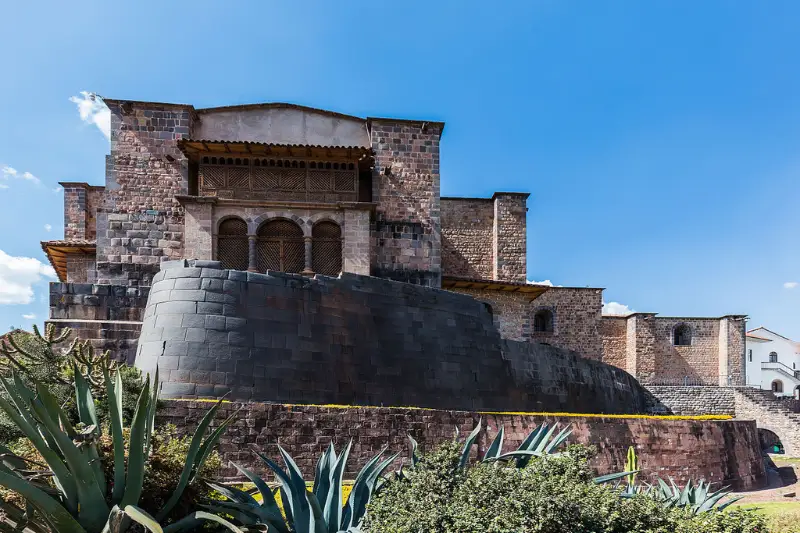
The 1950 earthquake in Cusco made the engineering argument better than any academic paper could. The Spanish colonial church of Santo Domingo collapsed. The Inca walls of Qorikancha underneath it didn’t. Colonial construction used rigid mortar and broke under the seismic load. The indigenous foundations moved with the earth and stayed standing. That outcome wasn’t luck and it wasn’t coincidence. It was inca architecture doing exactly what it was designed to do.

The reason comes down to dry stone construction. No mortar, no cement, no binding agent of any kind. Each block was shaped to fit its neighbors like a three-dimensional puzzle. Friction and gravity hold everything together instead of chemical adhesion. During a tremor the stones shift slightly, dissipate the energy through movement, and settle back into position when the shaking stops. The wall effectively resets itself.

These aren’t static monuments. They’re dynamic systems built specifically for one of the most geologically unstable regions on earth. That context changes how Machu Picchu reads. It wasn’t about moving big rocks. It was about building something flexible enough to outlast the civilization that built it.

inca architecture

Cracking the Code of the Three Stonework Styles

Inca walls don’t all look the same and that variance isn’t accidental. The quality of stonework on any given building was a direct signal of its social function. Same logic as using marble for a courthouse and cinder block for a warehouse. One of the most useful entry points into understanding inca architecture is learning to read those differences on sight.

The highest tier is Ashlar masonry. Stones cut into uniform rectangular blocks, laid in horizontal rows, no mortar. The joints are tight enough to be nearly invisible from a distance. This was reserved for temples, palaces, and anything that needed to communicate state investment and sacred importance.

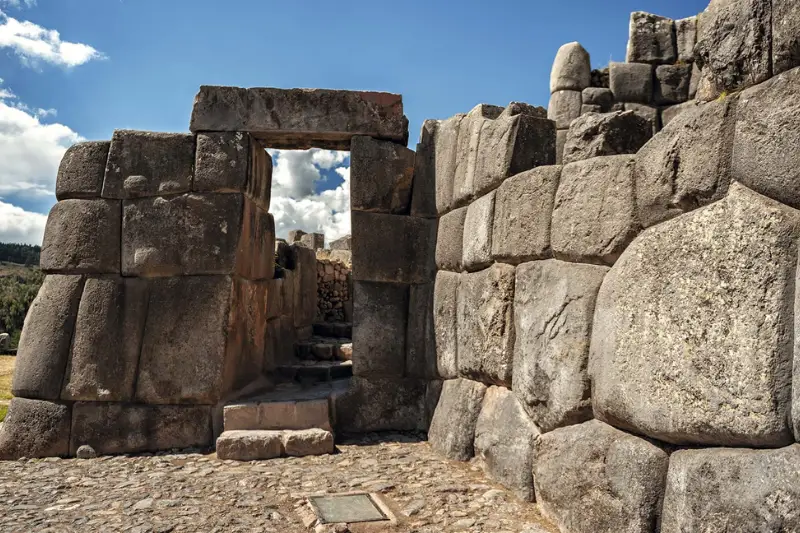
For retaining walls and fortress foundations where structural load was the priority, builders used Polygonal masonry. Stones carved into complex irregular shapes that lock together through geometry rather than binding. The interlocking angles handle enormous lateral pressure. Sacsayhuamán is the clearest example, giant boulders fitting against each other across massive zig-zag walls.

Everything else used Pirca. Unshaped field stones held with mud mortar for storehouses, commoner housing, agricultural terracing. Practical and fast, not built to impress.

The breakdown:

  • Ashlar: Rectangular smooth blocks for elite temples and palaces.
  • Polygonal: Irregular interlocking shapes for heavy-duty walls and fortifications.
  • Pirca: Rough river rocks with mud mortar for everyday structures.

The Pirca walls relied on dried mud. The Ashlar and Polygonal walls relied on physics. The absence of mortar in high-status buildings wasn’t a technological gap. It was a deliberate engineering choice based on a thorough understanding of Andean geology. Anyone who studies inca architecture long enough starts recognizing these three styles as a visual language broadcasting exactly what each building was used for and who it was built for.

Why Inca Stones ‘Dance’ During Earthquakes

The assumption that strong buildings require rigid construction doesn’t hold in the Andes. When seismic energy hits a wall that’s one solid cemented mass, the stress has nowhere to go except into fractures. The wall cracks and eventually fails. Inca engineers worked from the opposite principle, and that decision is central to why inca architecture has outlasted almost everything built after it in the same region.

Dry-stone masonry lets each block move slightly independent of its neighbors. During a seismic event the stones vibrate and shift against each other. That movement converts the earthquake’s energy into friction rather than structural stress. When the shaking stops, gravity pulls the precisely cut blocks back into their original positions.

Simple stacking wouldn’t survive violent shaking though. Flat-bottomed bricks slide off each other under lateral force. To prevent that, masons built re-entrant angles into the Polygonal blocks, corners cut directly into the stone that wrap around neighboring blocks and act as anchors. The stones can wiggle to release energy but they can’t slide out of the wall.

The joints handled vibration. The wall geometry handled the rest. Standing at the base of a high Inca wall reveals that it isn’t vertical. The entire face leans slightly inward. That deliberate inclination keeps the center of gravity low and stable, working alongside the loose joints to maintain structural integrity under load. That inward lean also explains the shape that shows up consistently across surviving examples of inca architecture.

inca arquitecture

The Lean of Power: How the Trapezoid Stabilized an Empire

Doorways at Machu Picchu and Ollantaytambo look wrong at first glance. The sides aren’t parallel. They angle inward, making the opening wider at the bottom than the top. The trapezoid shows up so consistently across Inca sites that it functions as a signature of inca architecture, but the shape wasn’t chosen for aesthetics.

Tapering walls inward keeps the center of gravity low and centered. The same principle as a person on a moving train spreading their feet for stability. The technical term is batter. The practical result is a structure that resists lateral seismic force far more effectively than a vertical wall.

The trapezoid also solves a specific structural problem at openings. The stone beam spanning the top of a doorway or window, the lintel, is the weakest point of any stone entry. It has to bear the weight of the wall above without cracking. By angling the jambs inward, the Incas shortened the span the lintel needed to bridge. Narrower top means less stress on the lintel, which means taller structures without collapse risk at the entry points.

A perfectly symmetrical trapezoidal niche or doorway identifies high-status imperial construction built for permanence. Recognizing that shape is one thing. Understanding how walls built to those specifications got constructed without the wheel or iron tools is a different question entirely.

Human-Powered Heavy Lifting: The Logistics of Moving 100-Ton Stones

Some blocks at Sacsayhuamán weigh over 120 tons. The civilization that moved them had no wheel, no iron tools, no horses, no oxen. What they had was organized human labor operating at a scale that made the physics work anyway. The logistics behind inca architecture are as impressive as the finished structures, maybe more so once the numbers sink in.

The workforce came from the Mit’a system. Construction wasn’t slave labor. It was a form of taxation. Citizens contributed labor to state projects on a rotating basis, well-fed and operating within a framework that framed the work as civic and sacred duty rather than coercion. Thousands of healthy workers available at any given time made the numbers viable.

The wheel’s absence wasn’t the obstacle it sounds like on flat terrain. On steep rocky Andean slopes a wooden axle would shatter. Instead, builders engineered earthen ramps paved with smooth stones and lubricated with wet clay or gravel. Thousands of workers pulled on woven grass or llama wool ropes while others used bronze pry bars to move blocks incrementally forward.

The sequence from quarry to finished wall:

  • Quarrying: Natural faults in the rock exploited by driving dry wooden wedges into cracks and soaking them with water until expansion split the stone.
  • Transport: Block lashed to a timber sled, hauled over lubricated ramps with coordinated rope teams.
  • Roughing: Excess stone removed at the construction site using harder river stones as hammers.
  • Final Fitting: Block ground directly against its neighbor through stone-on-stone abrasion until the joint closed completely.

The finished walls look like the stones melted together. That result came from patience, massive coordinated manpower, and simple applied physics. Moving the stone was half the project. Feeding the population that built these structures required reshaping the mountains themselves.

inca architecture

Vertical Engineering: How Terracing Turned Mountains Into Breadbaskets

The mountainsides of the Sacred Valley look like staircases built for giants. These are andenes, agricultural terracing systems that made farming viable on slopes that would shed topsoil in the first heavy rain without intervention. The visible flat steps are the surface of a much more complex system underneath, and they follow the same engineering logic found throughout inca architecture, working with the natural environment rather than against it.

Cross-section a terrace and the structure becomes clear. Below the topsoil sits a layered drainage system: fine sand, then gravel, then large rocks at the base. That sequence functions like a French drain, pulling water away from the root zone so soil doesn’t saturate, rot, or slide off the mountain. The stone retaining walls lean slightly inward to brace against the weight of earth behind them.

The stone walls did more than hold the terraces in place. During the day they absorbed high-altitude solar radiation and stored it. At night when temperatures dropped sharply, the stones released that heat back into the soil. The result was a microclimate that extended the viable growing range for crops like maize and coca to altitudes where the surrounding environment shouldn’t support them.

That agricultural surplus freed population capacity for other work. Astronomy, city planning, monumental construction. Turning near-vertical mountain faces into productive farmland was the economic foundation that made everything else possible.

Sacred Geometry: Reading the Urban Layout of Machu Picchu

A map of Machu Picchu shows a site divided by a central plaza into two distinct zones. The Agricultural Sector on one side, the Urban Sector with temples and residences on the other. That separation kept the productive functions of the site physically distinct from the ceremonial ones without isolating them from each other. The urban planning at Machu Picchu reflects the same principles visible in inca architecture everywhere else, precision and intention behind every spatial decision.

The Urban Sector shows builders working with the mountain rather than against it. Natural bedrock wasn’t blasted away to create level foundations. It was incorporated directly into the structures. The Temple of the Condor uses existing rock formations as the bird’s wings, with carved stonework completing the head and neck. The boundary between natural geology and constructed architecture was deliberately blurred.

The placement of structures also functioned as an astronomical tracking system:

  • The Sun Temple: A curved tower with a window that aligns with the rising sun on the winter solstice.
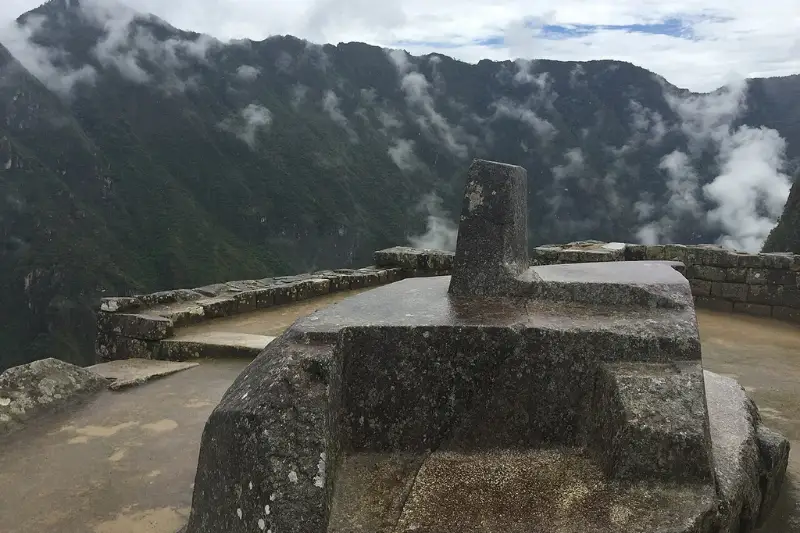
  • The Intihuatana Stone: A carved pillar that casts no shadow at noon on the equinoxes, used for precise agricultural timing.
  • Sacred Peaks (Apus): Ceremonial stones cut to mirror the silhouettes of surrounding mountain peaks, creating visual alignment between the built environment and the landscape.

The site operated as both a residence and a calendar. That dual function required the kind of precision the Inca applied to everything else they built. The drainage channels at Machu Picchu still flow. The walls still stand. The engineering held.

inca architecture

The Living Legacy of Inca Engineering

Standing in front of these ruins the scale registers first. After that, what starts to come through is the specific logic behind every visible decision. Trapezoidal doorways wider at the base to lower the center of gravity. Ashlar masonry was so tight that mortar wasn’t needed or wanted. Bedrock used as a foundation rather than an obstacle. Every element of inca architecture that looks like a stylistic choice turns out to have a structural reason behind it.

None of those choices were decorative. All of them were seismic survival strategies built into the geometry of the construction itself.

The Mit’a system adds a social dimension to what looks like pure engineering. Monumental construction achieved through rotating civic labor rather than coercion. That organizational model is as much a part of the legacy as the stonework itself.

The decision to build without mortar, which looks like a limitation, turned out to be the reason these structures survived centuries of earthquakes that brought down everything built on top of them. The stones move during tremors and return to position when the ground settles. Rigid colonial construction above them cracked and fell. The Inca walls underneath kept standing.

That outcome wasn’t accidental. It was the result of building with the geology rather than against it. What makes inca architecture genuinely worth studying isn’t the mystery of how it was built. It’s the clarity of why every decision was made the way it was, and the fact that five hundred years later those decisions are still holding up.