Stand 8,000 feet up in the air, surrounded by swirling mist, and face granite so smoothly installed against the wall that you cannot slip a piece of paper between the blocks. Even imagine the logistical nightmare of its creation. How do you drag and cut 20-ton carvings on an uphill cliff without iron tools or wheels? The intense physical effort reveals that people chose this isolated peak for a profound reason, far beyond simple shelter, as seen in the remarkable temples of Machu Picchu.
Most postcards refer to this expansive complex as a lost city but current research shows that that is not the case at all. According to scholars studying Machu Picchu history, it functioned primarily as a sacred sanctuary and a giant spiritual laboratory. Creators built a heavenly mirror to commune with other sacred mountain peaks.
To truly understand this ancient hub, look closely at the temples of Machu Picchu. These masterworks of mortarless stone were specifically designed to serve as a laboratory for the stars. By observing the astronomical alignments embedded in angled windows and carved altars, we can see exactly how this civilization captured sunlight like a camera lens to track the shifting seasons.

Run your hand along the massive stones of the Sun Temple. Unlike the rough, clay-bound rubble of common peasant houses, sacred temple architecture features “Imperial Ashlar” masonry.This was an exclusive process that entailed cutting the granite stones so that they would interact successfully without a drop of mortar. A closer look at Incan masonry compared with contemporary construction reveals a brilliant contrast: modern architects apply cement to stick inflexible walls together, whereas Incan architects build moving constructions designed to absorb the seismic energy of the Andes.
When the earthquakes occur, these mortarless walls are able to perform a marvelous trick: they can “dance”. Rather than cracking under the immense pressure, the stones bounce slightly and resettle precisely into their original positions. The Principal Temple achieves this puzzle-like perfection using three ingenious features:
Thanks to this self-healing mechanism, these sanctuaries have outlasted centuries of tectonic chaos that easily flattened later colonial structures. Now that we understand how these individual buildings survived the shifting earth, we must look at how they connect. The layout of the Sacred Plaza reveals the hidden cosmological meaning behind the open spaces between them.
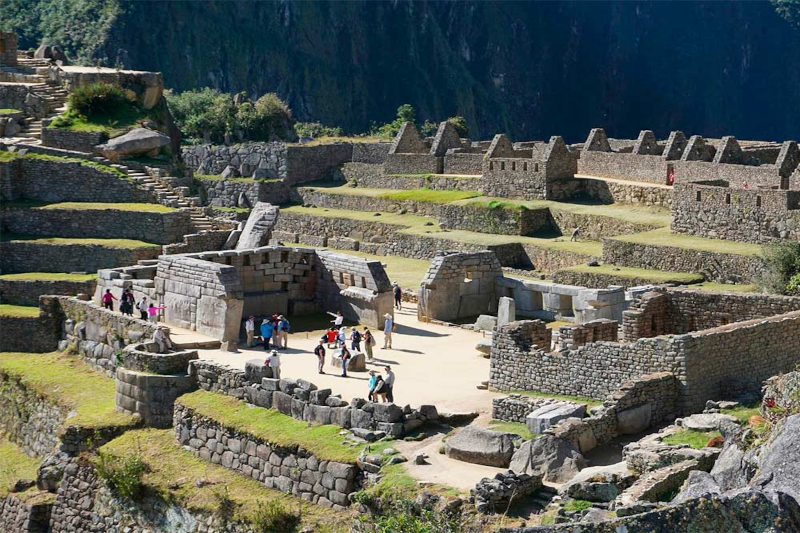
At the closures you enter into a flat open courtyard cut out of the mountain. The creators constructed Sacred Plaza in a clear U-shaped form, but not in a closed square. Think of it as a grand ancient stage. By leaving one side completely open to the valley, high priests could perform rituals that remained perfectly visible to thousands of citizens gathered on the lower agricultural terraces.
This communal space is surrounded by three stone buildings namely: the Principal Temple, the Priest House and the Room of the three windows. This particular cluster shows the Incan concept of the world that classified the universe into a trilogy of the underworld, the earth, and the sky. These are the three rules which are key to the identification of the sacred Incan symbols and brings the ordinary architectural ruins to a level of an understandable map of their cosmic conviction.
This central hub functioned as a spiritual broadcasting station, effectively bridging the gap between divine rulers and everyday farmers. While the plaza hosted these massive public spectacles, capturing the heavens’ exact movements required more intimate architecture. To see how engineers trapped sunlight in stone, we must step away from the crowds and look inside the Temple of the Sun.

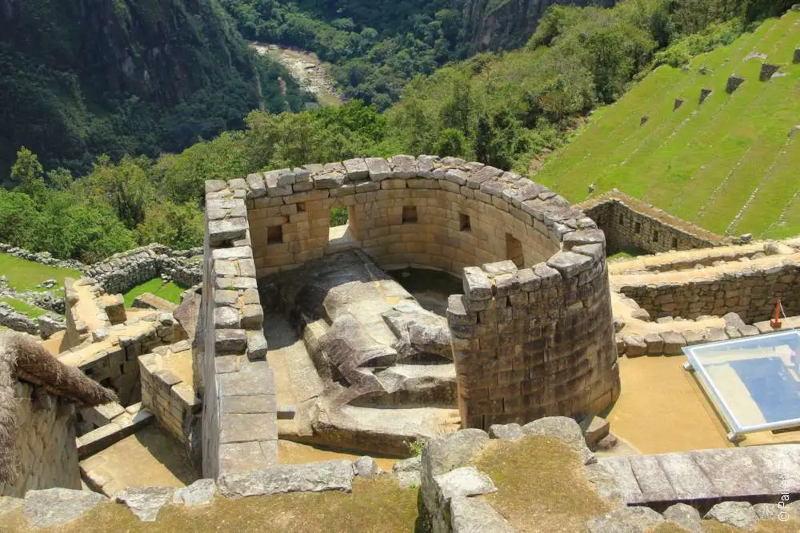
Stepping away from the rectangular buildings, one notices a single uncommon and semi-circular tower constructed upon a huge granite boulder. This curved sanctuary -the Torreon – as opposed to normal Incan houses with sharp edges resembles the natural rock under it.
While visitors often debate the spiritual hierarchy of the site’s various structures, this specific tower served a highly practical purpose: it was an agricultural calendar. By studying shifting shadows across the bedrock, priests predicted the exact times to plant and harvest life-saving crops, much like the experimental terraces of Moray in the Sacred Valley.
Engineers designed the walls with specialized solar tracking windows that functioned much like a camera lens. Instead of glass, these carved openings captured focused sunbeams, revealing profound astronomical alignments during critical dates:
While the Torreón elegantly maps the sun’s journey, the Inca’s broader spiritual story extends even further into the sacred plaza. Just a few steps away, another monumental stone puzzle awaits.
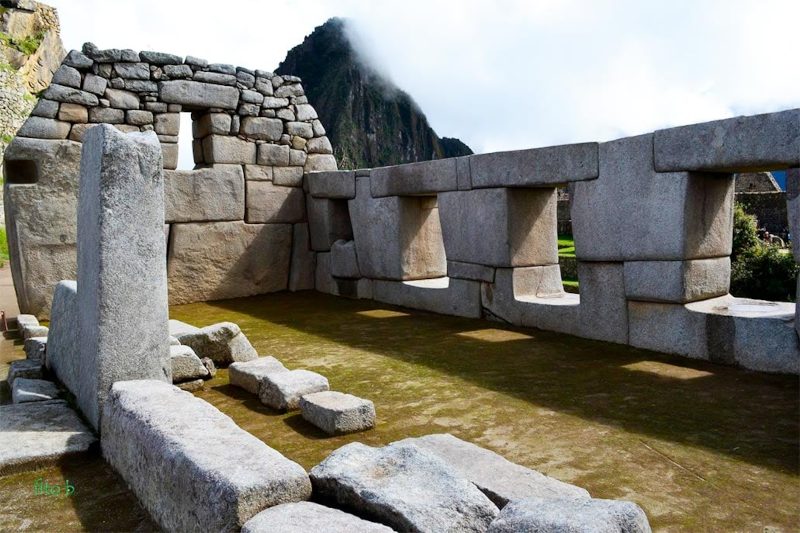
Looking across the Sacred Plaza, you cannot miss an eastern wall pierced by massive, trapezoidal openings. Constructing this required profound dedication; builders somehow hoisted three-ton stone lintels—the heavy blocks spanning the top of each window—without wheels or iron tools. This engineering triumph was not just aesthetic, but carefully designed to immortalize a legendary creation story.
According to Incan mythology, the empire’s founders emerged directly from the earth. The Temple of the Three Windows is deeply tied to Tamputoco, a mythological mountain featuring three distinct caves. From the central cave stepped the first Inca king, entering the world to establish his civilization. By building these precise openings, priests permanently carved their origins into solid granite.

Standing inside to look out reveals the Inca’s reverence for Apus, or powerful mountain spirits. These windows act as permanent picture frames highlighting the sacred peaks beyond, seamlessly fusing architecture with the surrounding nature. This desire to physically tie earth to the heavens pulls us even higher up the ridge toward the ultimate cosmological tool: The Intihuatana Stone.
Reaching the top of the highest terrace you come upon a granite pillar which has been carved toward the heavens. It was this jagged monument which served as an exact astronomical clock which followed the seasons. It was referred to by the Incas as the Intihuatana which translated well to the “Hitching Post of the Sun”. Due to heavy dependence on agriculture, ritual roles of the pillar were essential since the priests symbolically linked the sun to the rock at the winter solstice to ensure that their life-sustaining deity did not vanish.
The bottom of the sculpture closely features four corners that follow exactly the cardinal directions of north, south, east and west. The engineering is so exact that during the equinoxes, the sun sits directly overhead at exactly noon, causing the central pillar to cast absolutely no shadow. There is no better time to take photographs than the solar noon; it is a shadowless, fleeting phenomenon that is difficult to capture.
Beyond measuring time, this peak served as a spiritual anchor for the citadel. Echoing the profound spiritual energy felt at the Sacred Rock elsewhere in the ruins, the Intihuatana absorbed power directly from the cosmos. This seamless blending of natural geology and deep religious belief continues as we move into the lower sectors.

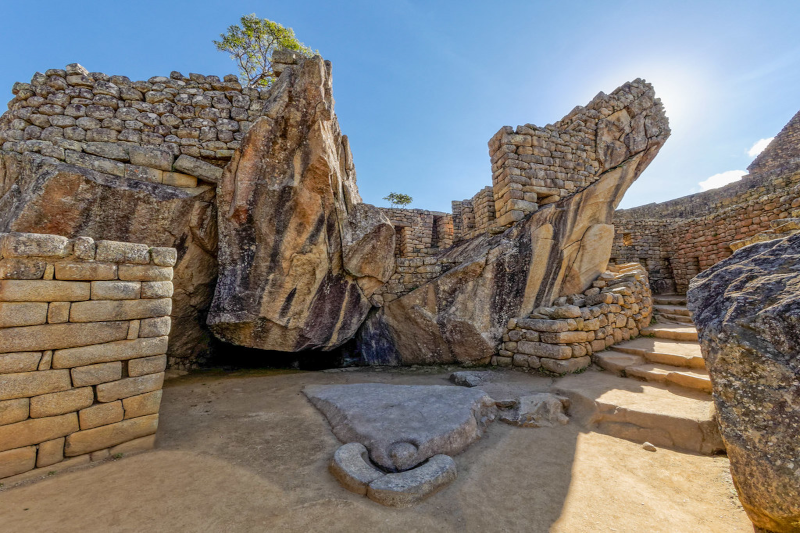
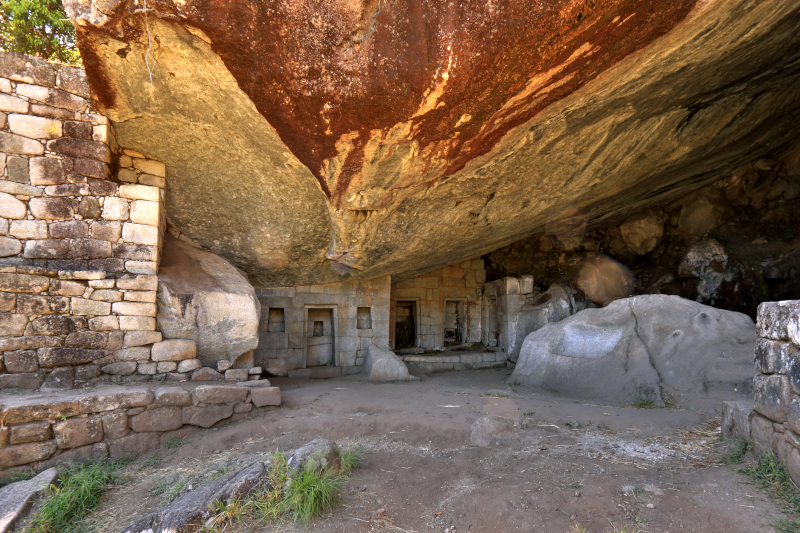
Tucked into the lower sector is one of the site’s most mesmerizing Machu Picchu attractions. When you approach, you might simply see a jagged cavern. But look closely at the ground: a flat stone is carved perfectly into a bird’s head and neck ruff. Behind it, two enormous natural boulders jut outward. This perfectly illustrates organic architecture. Incan constructors also used raw geology of mountain as part of the design and smoothly combined untouched mountain with human construction to create an illusion of the enormous bird landing in the city.
The importance of the wings of the Condor shows just how the Incas perceived heaven. The Andean condor was a divine messenger to them, whose duty was to transport human prayers to the heavens. Builders made an everlasting earthly monument to this divine relationship by the composition that sweeping, natural rocks were the outstretched wings of the bird.
Still, the dark areas beneath these wings were confused by early explorers with dungeons, and a myth of Inca prisons remains intact. However, when the intricately cut offering niches are found on the site, a silent area intended to possess ceremonies instead of punishment is reflected.This reverence for shadowed, sacred spaces perfectly prepares us for our next destination.
The towering, sugarloaf peak of Huayna Picchu, which forms the backdrop of all the traditional postcards, is climbed by a dizzying, steep path that leads to the eventual descent on the far side of the mountain. Here, hidden within a natural shallow cave far removed from the bustling main ruins lies one of the most secluded and mysterious architectural marvels of the ancient world.
The stones within the cavern are hewn out with impeccable accuracy, and are fitted together in some complication of puzzle elements without a drop of cement. This intentional position in the dark depicts the great Inca notion of Hanan and Hurin, the balance of conflicting forces, like between upper and lower, or light and dark. This dualism is just visible when comparing the bright and towering Temple of the Sun to this underground Temple of the Moon. One gleefully takes the sunshine rays in his lap, and the other absorbs cool shadowed depths of the earth all to himself.
Constructors aligned these crevices perfectly well with the natural cleavages of the mountain and they treated the cave as a life form.This hidden cave proves the Incas viewed every stone as part of a divine tapestry. This balance of earthly extremes naturally directs our attention upward, revealing a grander design overhead.

Looking up from the shadowy cave depths, you might wonder why the Incas built the temples of Machu Picchu on mountains so difficult to reach. The answer lies in the stars. To the Inca, the night sky was a living mirror. They believed the Milky Way—known as the Mayu , or Celestial River—was the heavenly counterpart to the rushing Urubamba River below. This deep astronomical alignment transformed the city into an interactive cosmic map, anchored by invisible spiritual pathways called ceque lines that connected sacred sites.
This deliberate heavenly mirroring is visible in three distinct ways across the citadel:
Nature and architecture also blend seamlessly on the ground. Stand before the sprawling stone at the city’s northern edge; its jagged outline perfectly mimics the Yanantin mountain looming behind it. The spiritual resonance visitors feel stems directly from this exact harmony between built environments and natural geology.
You no longer look at Machu Picchu as just a beautiful pile of mortarless stones. You now recognize a massive, masterfully engineered astronomical laboratory where the Incas captured the sky. For visitors, planning a route through the temples of Machu Picchu helps this story unfold.
To experience this living calendar, timing and access are everything, and Machu Picchu tickets are timed and limited. Navigating the upper religious circuit requires planning to catch the sharp morning light before heavy crowds arrive.
Maximize your visit with this recommended temple sequence:
Finally, plan to visit the Inti Punku (Sun Gate) at dawn. From this vantage point, the entire sanctuary reveals its incredible cosmic alignment just as the builders intended. When you stand before these walls, you won’t just see ancient ruins—you will read the stones like a watch, perfectly connected to the stars.