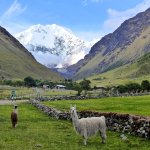
Abra Salkantay is one of those places that sounds like a pin on a map… until you’re there, staring up at a wall of ice and rock, trying not to gasp like a goldfish. It’s a mountain pass in Peru, high on the Salkantay trek, and it’s the moment most people remember for the rest of their lives—partly because it’s beautiful, and partly because, wow, the air is thin.
Let me set expectations early: this is not a gentle stroll. Then again, it’s not some elite-only suffer-fest either. Both things can be true. If you plan like a grown-up (and hike like a sensible person), Abra Salkantay is very doable—and it’s also the kind of trip that makes normal life feel a little… small, in a good way.
“Abra” means “pass.” So Abra Salkantay is the Salkantay pass, the high saddle you cross beneath the huge white shoulder of Salkantay. People also call it Salkantay pass Peru when they’re searching for it online, because “Salkantay” can point to a bunch of nearby places.
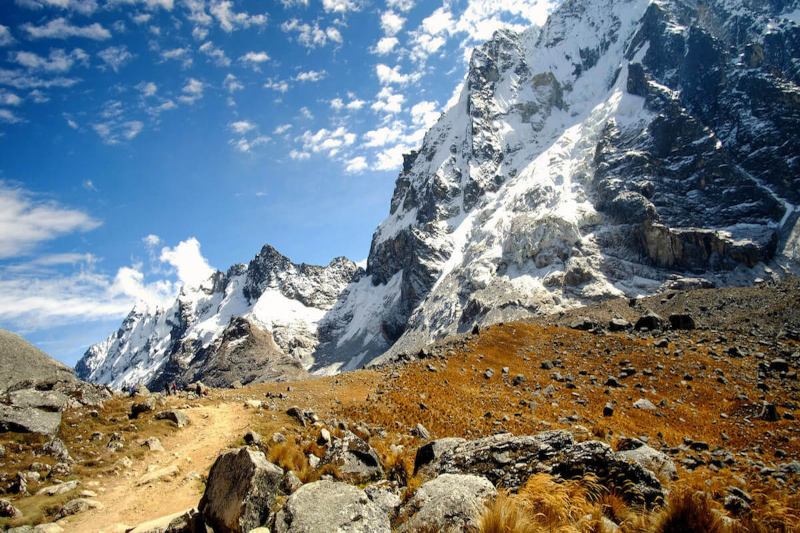
So remember the number: 4,600 m (15,090 ft) is the elevation of the pass in Salkantay. That’s already pretty high, and they start sending you emails to your body asking “what are we doing?” At the same time, the summit of Salkantay peak (which can be translated as Salkantay mountain on a number of guides, but not all) rises above at an altitude of approximately 6,271 meters (20,574 ft). The ascent to the summit isn’t the treatment on the regular hike, but it’s like the venturer rolling out the big ramparts on the corner.
Yes, in Andean culture it is a sacred mountain (an Apu – protector spirit). With the wind whipping and the glacier crackling it’s hard not to get a bit daim in the presence of the spiritistic traveller. You know what? Some places earn your respect fast.
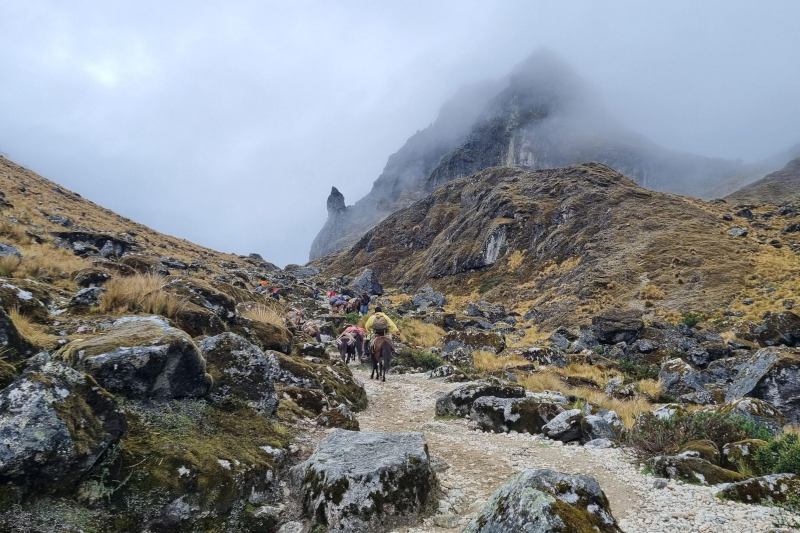
The majority of hikes for the Salkantay trek are a 5 day affair stopping at Machu Picchu. Day two is typically the most important one – reaching the pass. You’ll start early, because guides like to beat the weather (and because it’s nicer to grind uphill while the sun is still deciding if it’s coming out).
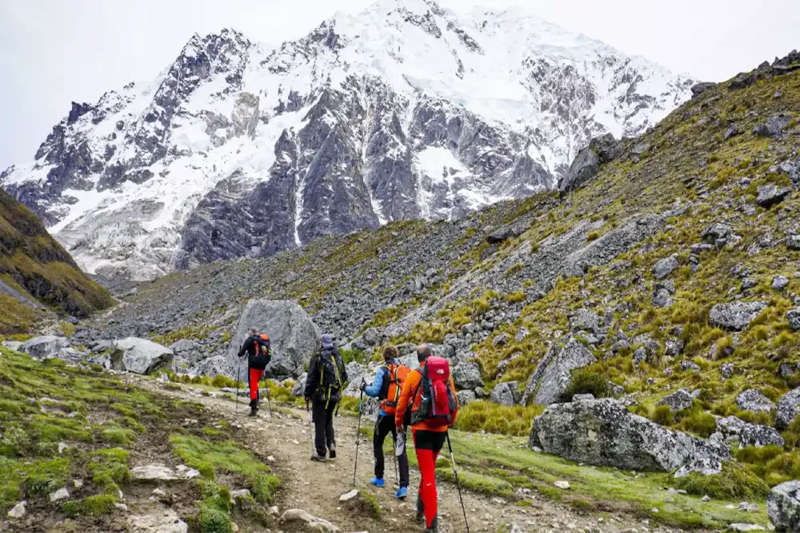
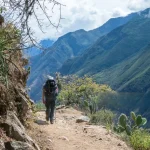
Somewhere on that climb you’ll hit the famous switchbacks called the “Trail of the Seven Snakes.” It sounds dramatic. It is. The path zigzags up a slope that feels like it was designed by someone who dislikes calves.
Here’s the thing, though: the trail isn’t tricky in a technical way. It’s not a climbing route. It’s just… steady. Step, breath, step, breath. If you’ve ever had a big work deliverable and you got through it by breaking it into small tasks, it’s that. Your project plan is your pace.
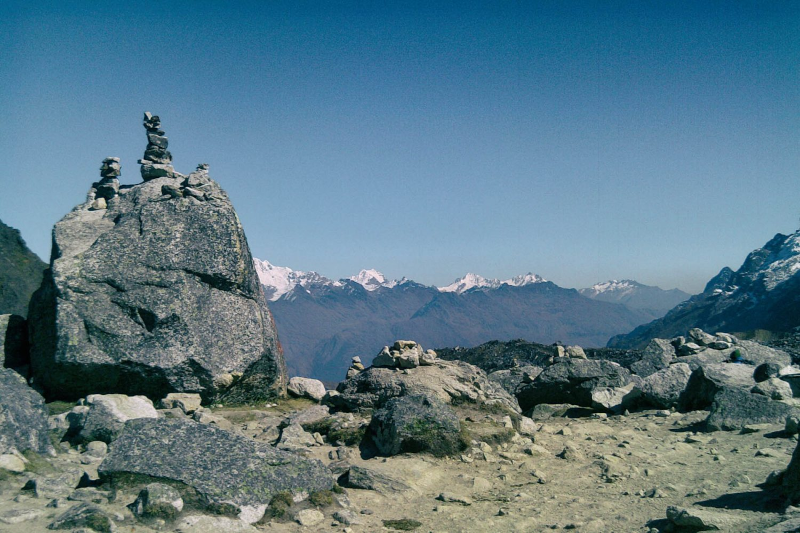
Finally, when you arrive at Abra Salkantay, the world will be open to you. It offers this broad vistas where jagged ridges and subtle hues of rock tell a tale of the ice flows; it’s like an aerial snapshot of a frozen wave. People go quiet up there. People also take a lot of photos. Both are correct choices.
You may see little rock piles, called apachetas. Trekkers add a stone as a small thanks to the mountain. You don’t have to do it, but it’s a respectful gesture—and it’s kind of nice to mark a moment that took real effort.

It can also feel weirdly emotional, and then you’ll laugh at yourself for feeling emotional. That’s normal. Altitude does that, and so do big landscapes.
Now for my favorite twist: right after the pass, you drop into greener country. Fast. The evening’s weather goes from cold and dry to wet and lush over a couple of hours! It turns into a cloud forest and then orchids and ferns and birds and earth and rain on a sidewalk—just this much worse, in a variety of plants.
This is where the Salkantay route feels like a highlight reel. Morning: glacier. Afternoon: jungle-ish forest. It’s like Peru is showing off, and honestly, fair.
The hard part isn’t a single monster move. It’s the combo: altitude, long walking days, and big ups and downs. Most people can handle the distance. What catches them is the thin air and the downhill pounding on tired legs.
If you’re comparing it to the Inca Trail, here’s a simple read:
So yes, it’s tough. But it’s the kind of tough that responds well to basic risk management: pace, food, water, and not trying to prove anything.
Altitude sickness (you’ll hear “soroche” in Peru) can hit anyone. Fit people. Slow people. People who ran a marathon last month. Bodies don’t care about your résumé.
What helps most is simple:
On the trail, guides often say “Inca pace”—slow and steady. It’s not corny. It works.

You’ll see people overpack for Salkantay and suffer. You’ll also see people underpack and suffer. So yes: it’s a balancing act. A few items do a lot of heavy lifting:
Quick digression: if you’re the type who likes data (or you need a little motivation), a Garmin watch or a phone app like AllTrails can be fun. Not required. But seeing your elevation gain can turn a rough hour into a small win: “Okay, that’s 800 feet. I can do another 200.”
Going with a guide isn’t just about directions. Logistics: meals, entry tickets, camp sites, horses or mules to transport equipment and a plan in case someone gets sick. Imagine that you have a project manager that is a mountain geek.
If you have excellent experience of backpacking at altitude, and you are comfortable with carrying a heavier backpack, self guided trekking can work. If it’s your first trek in the high passes, a guide is most likely the better play as you’ll gain much more time to research and have less stress!
The best season for drought, May to October. The blue sky, fresh air and cold nights. Mud, clouds and trail conditions can occur during the wet season (appx November to April). February is often the roughest.

Here’s a small contradiction, and I mean it: a little bad weather can make the trip feel more real. Then again, too much rain can hide the mountains and make everything slippery. If you want the safer bet, aim for the drier months—especially if you’re traveling from the United States and you’re trying to line this up with PTO and flight prices.
Abra Salkantay isn’t just a point on the route to Machu Picchu. It’s a threshold. As you go from high and hard conditions in the Andes, to green valleys, your brain quiets. You’re tired, you’re proud, and you’re here.You’re fatigued, you’re proud and you’re here. It sounds cheesy. It also happens.
With a little training, proper packing and a healthy dose of respect for the altitude, the Salkantay pass isn’t quite such a beast and is more apt to be a story to tell with that half smile that reads “Yeah… it was a lot. And I’d do it again.”