Tambomachay History and Facts Peru

Ruin is a word that reiterates something that has been broken or something that was forgotten. Tambomachay challenges that idea. Its stone fountains are now above Cusco still running with clear spring water as they did more than 500 years ago. This site feels alive. The water-running traffic is an indication of how Inca venerated this crucial aspect.

It has beautiful waterfalls, and people refer to it as the Baño del Inca (Bath of the Inca). It’s also very easy to visit. If you’re wondering how to get to Tambomachay from Cusco, it’s only a 15-minute drive. The location is located approximately 8 km (5 miles) away. Its Quechua name is probably translated as a resting place cave and this implies that there is more to it than a bath.

Tambomachay is part of the popular Cusco circuit. Sacsayhuaman, Qenqo and Puka Pukara are usually included in this tour. Tambomachay is the highest and quietest stop. It provides a relaxing contrast to the bigger adjacent locations. A lot of tourists begin or finish their tour here.

How Did Inca Engineers Make Water Flow Perfectly for Over 500 Years?

Tambomachay

The first thing visitors notice at Tambomachay is the sound of water.Water continuously emerges from centuries-old fountains. It does not flow from a diverted river or a mechanical pump. Instead, the source comes from a natural underground spring, perfectly harnessed by Inca engineers. Hydrology was perfected by Inca engineers. 

They did more than dig a ditch. In its place a complicated network of concealed canals was constructed to direct the water. These conduits pass through and behind the terraces, the velocity and movement of the flow being regulated. This ingenious construction makes the water mild and uniform, and no devastating torrents. The entire building is mobilized as a plumbing system cut out of the mountain.

The genius is shown on the principal wall. Arising out of two symmetric stone spouts is water. These two waterfalls are almost similar. All of them discharge nearly equal amounts of water. This is impressive accuracy. They even to this day run almost harmoniously. This precision is admired by a number of contemporary engineers. The recurrent sound must have had sense. It assisted in establishing a mood of calmness and religiousness.

This engineering was decorated. It was related directly to the role of the site. To the Incas, water was life and also purity. They manipulated it creating a divine landscape. They composed religious and political significations. But the exact purpose remains one of Tambomachay’s mysteries.

A Royal Spa, a Sacred Temple, or a Military Post? Unpacking Tambomachay’s True Purpose

And what was this work of engineering anyway? Although the water flowing is an undeniable reality, the real meaning of the site is a mystery that is exciting. Archeologists do not possess one and obvious solution but the facts allow a number of intriguing options.

The Three Leading Theories

There are three theories, the most popular ones, that argue about the evidence that was deposited on the stone:

  • A Sacred Water Temple: Water was an important part of the Incas, and it was necessary not only to their material existence but to their spiritual purification as well. Many experts believe Tambomachay was a huaca–a sacred place or shrine–dedicated to the worship of water. The beautiful, continuously running fountains would have been ideal in carrying out religious ceremonies.
  • Inca Emperor Spa: The name of the place, which means bath of the Inca, implies that the place was exclusive. This is facilitated by the peaceful environment. The location can have been a personal retreat. There the emperor and nobility were able to rest. They were also able to cleanse themselves of the crowded capital.
  • A Checkpoint and Royal Hunting Lodge: Tambomachay is strategically located along an ancient Inca road that led into Cusco. This rank has been taken to mean that it might have been used as a fortified post in order to regulate entry into the imperial city. It could have also been used as a royal lodge, where the emperor could get a hunting ground on the hills around it.

Multi-Functional Design: Temple, Spa, and Fortress

Tambomachay

After all, these functions did not exclude each other. A location would be a temple, spa and fortress simultaneously to the Incas. The emperor was able to perform religious rituals in the morning, to rest in his own baths in the afternoon and he was aware that the post was guarding the entrance of the capital. This functionalism is a typical aspect of Inca design because all structures were constructed as functional and meaningful beings.

This spiritual mixture of the spiritual and the practical does not only find a reflection in the water, but also in the stones themselves. The site’s incredible stonework holds its own set of clues about Tambomachay’s importance.

More Than Water: The Secrets Hidden in Tambomachay’s ‘Jigsaw Puzzle’ Stonework

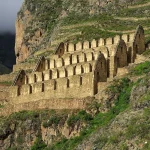
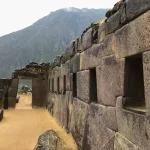
Look closely at the walls of Tambomachay and you’ll notice something incredible: there’s no mortar. Inca did not have cement or any binding material to cement the stone. They instead perfected a process known as polygonal masonry. They carved out every stone to fit it within its neighbors. The building then goes self-supporting as a 3-dimensional jigsaw puzzle. This method was only done with important buildings at a slow pace. It shows Tambomachay was far more than a simple outpost.

In addition to the ideal installation of stones, there is one more signature explored through the site and this is the trapezoid. Examine those ritual niches in the retaining wall. At the bottom they are wide and at the top narrow. This form was not used decorative. It was smart engineering. It served to resolve a great local issue.

Earthquake-Proof by Design

The walls were therefore so resistant to earthquakes because that trapezoidal design was very robust. Incas resided in an earthquake-prone area. They anticipated great shakings. They had to be supported by their structures. Those with a greater base provided greater stability. The stones may slowly move during the earthquake. They would be able to dance without falling. As soon as the quaking had ceased, they established themselves back. 

How to Visit Tambomachay: A Practical Guide to the Four Ruins Tour from Cusco

Are you ready to observe the Inca sacred fountains by yourself? You must be aware of the entrance fee before you settle on the mode of getting there. Tambomachay is one of the premier Cusco Tourist Ticket included sites, meaning you cannot buy a single-entry ticket at the gate. Before setting out, you have to buy Boleto Turistico del Cusco, a multi-site ticket which will allow you to access a network of ruins. 

When you already have your ticket, you can get into the site with ease, and no matter your budget or method of traveling, you have a choice of everything.

  • Guided Tour: The level of least difficulty. Cusco also has dozens of agencies that offer half-day tours by the name of Four Ruins which include transport and a guide.
  • Private Taxi: The most adaptable. You can also hire a driver to tour you at a personal speed (but this is the most costly trip as well).
  • Colectivo: To the adventurous and economical, you could take a colectivo (communal van common among the locals) to the direction of Pisac and request your driver to be dropped off at the location. It is the cheapest method for anyone who is comfortable to visit the four ruins in Cusco by himself.

A visit to Tambomachay itself is relatively quick; most people spend about 30 to 45 minutes exploring the terraces and fountains. Since it is only a 15-minute drive to the city, it is most often considered as a half-day tour together with the nearby Inca sites of Puka Pukara, Q’enqo and the glorious fortress of Sacsayhuaman.

Tambomachay vs. Puka Pukara: Which Ruin Should You Prioritize if Time is Short?

Tambomachay

Choosing between Tambomachay and Puka Pukara feels like deciding between two completely different worlds, because that’s exactly what they were. Tambomachay is a masterpiece of serene engineering, a place of spiritual devotion to water. Conversely, Puerto Puka, also known as Puka Pukara, the name of which translates to Red Fortress, is an obstructive, useful military camp. 

Luckily, it is not one of the options that you must make. The two locations are right across the street facing each other, making them very close and you can walk around them within one point five minutes. From the weathered stone ramparts of Puka Pukara, you have a perfect bird’s-eye view looking down upon the elegant terraces of Tambomachay. 

Finally, the locations are two sides of one story. The first one discloses the spiritual reverence and dominance of the Inca over nature, whereas the other one illustrates their dominating strength and mastery over the empire. The question is then, not which of the two to visit but how being able to see both on the famous circuit of the four ruins enhanced your appreciation of the trends of the Inca civilization. 

Is Tambomachay Worth Visiting? The Final Verdict on Cusco’s Water Sanctuary

To see Tambomachay is to recognize the quiet genius flowing through its channels. It is not just a photograph of stone walls but it is an operational masterpiece, a possible spa, a possible shrine or a possible royal lodge all around the divine gift of water. This perspective helps answer a crucial question for any traveler: is Tambomachay worth visiting? Seeing cusco is a fantasy to everybody.

The answer is yes, should you admire fine precision in size besides grand size, and the thought of the possibility of seeing a system already 500 years old and find it still operating flawlessly makes you excited. The next thing to do once you come there is the simplest one of all: just listen. Allow the sounds of the fountains to tie your purpose to the site and that the real valuables of the site are not merely visible, but audible and palpable.

Tambomachay’s legacy is not that it is big, but that it is alive. You go there and find history in stone, but you come back and see that it is not lifeless. You listen to that same soft waterfall that once poured down upon Inca kings, and you realize that not all history is a thing of the past. It is the current that keeps on moving, and it is beckoning you to join the flow of its timeless narration.