Ollantaytambo ruins travel guide and key details

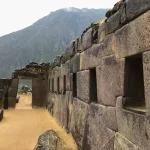
The Ollantaytambo ruins stand where three valleys meet in Peru’s Sacred Valley, a junction that gave whoever held it control over highland-to-jungle trade. Stone channels cut six centuries ago still carry water through the residential streets today. Current families live inside the original Inca grid, using the same trapezoidal doorways their ancestors built. The cancha layout, a courtyard ringed by stone homes, remains structurally intact across most of the town.

The peru Ollantaytambo ruins make more sense visited before Machu Picchu than after. Ground-level urban logic is readable here in a way monumental sites don’t show. Agricultural terraces climb from the working neighborhood up to a temple platform built from blocks hauled across a redirected river. That vertical range, from inhabited street to 50-ton stone construction, covers more engineering variety than most visitors expect from a single site.

ollantaytambo ruins

How to Reach the Fortress: Navigating the Journey from Cusco to Ollantaytambo

For Ollantaytambo travel, Cusco to the site runs two hours by road at lower altitude. Early departure avoids afternoon crowds at the entrance gates. Most Sacred valley tours include this stop alongside Pisac and the salt flats at maras and moray, making private transport the most flexible option for covering multiple sites in one day. Getting there:

  • Colectivos: shared vans, cheapest option, leave frequently from Cusco
  • Private taxis: direct, flexible stops, higher cost
  • Trains: comfortable, scenic mountain route

The train station sits ten minutes on foot from the town center. Moto-taxis move heavy bags through cobblestone streets fast. The terrace staircase is visible from the main plaza on arrival.

Why the Agricultural Terraces Were Actually Stone Refrigerators

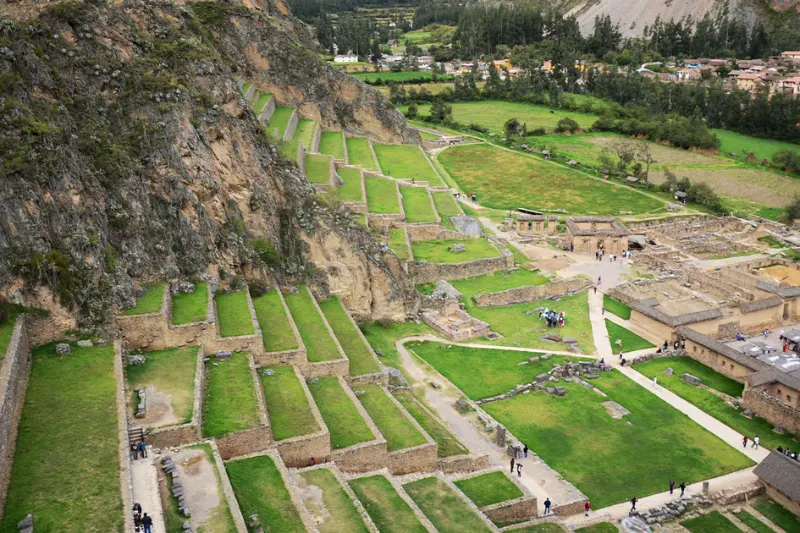
The 17-level terrace system at the Ollantaytambo ruins was thermal engineering before it was farming. Stone walls soaked up direct mountain sun during the day and released that heat after dark when temperatures dropped sharply. Each level held a different microclimate: corn at the base, frost-resistant potatoes near the top. Nothing comparable exists at other inca ruins in the Sacred Valley in terms of preserved thermal function.

Flying steps, single stones jutting from vertical terrace walls, let farmers move between levels without compacting soil or crushing planted rows. Wall material was chosen for thermal mass, not just load-bearing capacity. The top of the terrace system connects directly to the temple platform above.

ollantaytambo ruins

The Mystery of the Temple of the Sun: How 50-Ton Stones Crossed a Raging River

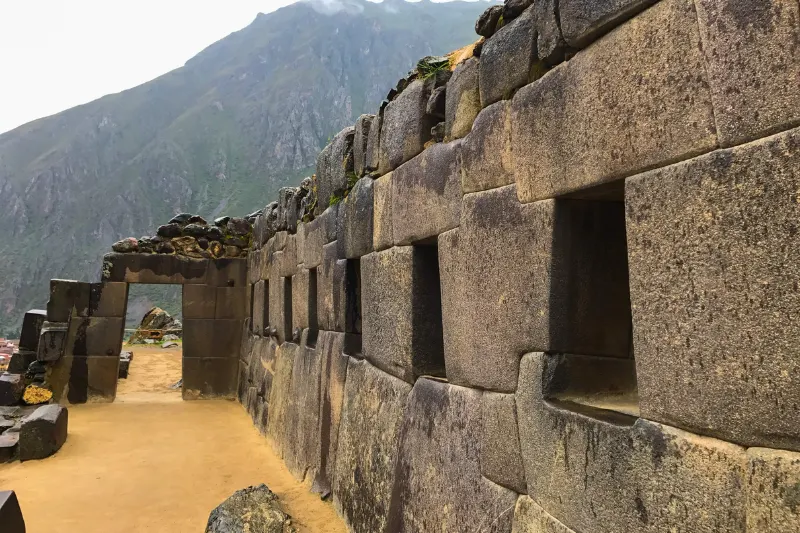
The Wall of the Six Monoliths uses rhyolite from the Cachicata quarry on a separate mountain across the valley from the ruins of ollantaytambo. Each block weighs around 50 tons. Workers brought them down the quarry slope, rerouted the Urubamba River temporarily, then dragged the stones up an artificial ramp to the platform. The logistics required redirecting a major river as a construction step.

Ashlar masonry fits each block to the next with no mortar, using precision shaping alone. This jointing method is one of the most studied examples of inca architecture still standing at original scale anywhere in the Andes. T-shaped cuts between stones held bronze clamps against seismic movement. The wall survived centuries of Andean earthquakes without structural failure using that system.

Deciphering the Water Fountains: The Royal Bath and Hydraulic Perfection

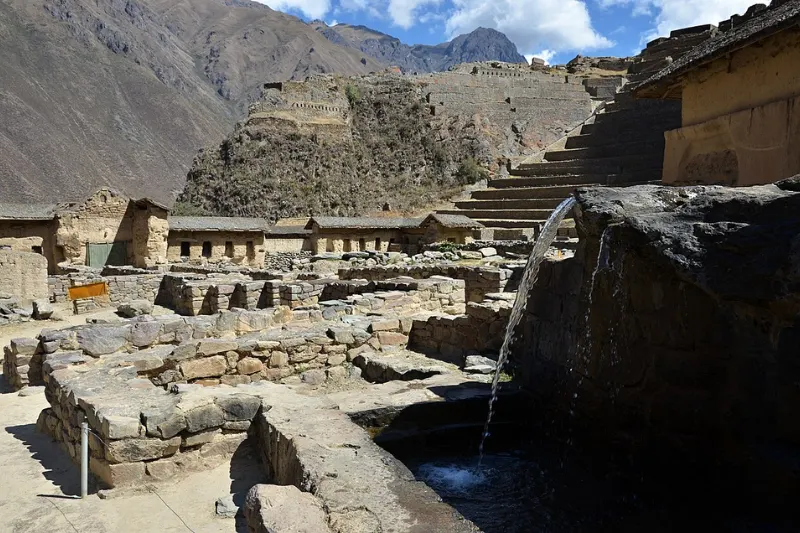
The Baño de la Ñusta sits in the lower section of the Peru ollantaytambo ruins, carved from one rock and still carrying active water after five hundred years. It functioned as a paqcha, a ritual fountain where water held ceremonial weight beyond daily use. A buried drainage network under the plaza floor connected to the same water source. That subsurface system keeps standing water off the plaza surface even during wet season.

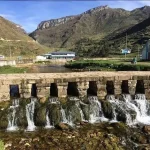
Mountain stream channels run visibly along the main residential streets throughout the town. The hydraulic system covered the entire urban grid, not just the ceremonial zone at the center.

ollantaytambo ruins

Looking Up: The Ingenuity of the Pinkuylluna Granaries

Qollqas, stone storehouses, sit high on the Pinkuylluna cliff face across from the ollantaytambo ruins. Altitude kept them in constant cold wind, holding internal temperatures low enough to preserve grain and potatoes for years. Window placement created cross-ventilation that extended storage life further. That food reserve supplied the population through sieges and crop failures without any mechanical refrigeration.

The Pinkuylluna trail reaches these storehouses and gives the clearest full-site view in the valley. The cliff beside them holds the natural rock profile of Tunupa, an Andean deity whose face reads in the stone above the town.

The Last Stand: When the Inca Defeated the Spanish at Ollantaytambo

In 1537 Manco Inca held the terraces against Spanish cavalry coming up the valley floor. Stones dropped from the upper levels while irrigation channels below were opened, flooding the approach and turning the ground to mud. The horses stopped moving. Spanish forces pulled back in one of the few outright Inca victories in direct combat during the conquest.

Manco Inca abandoned the site afterward, expecting larger forces to follow, and moved toward Vilcabamba in the jungle. Standing at the base of the terraces makes the military logic of that battle obvious. Height advantage, controlled flooding, and years of stored food gave every practical edge against mounted soldiers on that specific ground.

ollantaytambo ruins

Should you visit Ollantaytambo or Pisac?

The Boleto Turistico covers both on one pass. The choice comes down to terrain and time available. Travelers combining a Machu Picchu and sacred valley tour in one trip typically stop here on the way to the train, since the station connects directly to the Machu Picchu rail line. Core differences between the two sites:

  • Ollantaytambo: working town, fortress terraces, monolithic stone temple, military history
  • Pisac: mountaintop site, sweeping agricultural curves, largest known Inca cemetery

Both require sustained climbing above 9,000 feet. Physical condition and remaining days in the valley usually decide it.

Survival Guide: Altitude Sickness and the Best Time to Visit

Acclimatization matters before climbing at the Ollantaytambo ruins peru. Two days in Cusco or the sacred valley before the visit cuts the risk substantially. Coca tea handles early symptoms including headache and low energy and is sold throughout the valley. Going straight from sea level arrival to the terraces the same day is the most consistent mistake first-time visitors make.

May and September are the most practical months at this site. Rainy season trail damage is repaired by May and July crowds have not arrived yet. September holds similar conditions before November rains return. Clear skies and stable surfaces on both the terraces and the Pinkuylluna trail are reliable in both months.

ollantaytambo ruins

Beyond the Stones: Why Ollantaytambo’s Genius Matters Today

The Ollantaytambo ruins still function in several of the ways they were built for. Water runs through original stone channels. Residents use the original residential grid. Terrace walls still demonstrate the thermal cycle that protected crops for generations. None of that needs explanation or reconstruction; it is visible and active on the ground during any visit.

Crowds thin out after early afternoon. The ruins of Ollantaytambo at lower foot traffic read differently, with construction scale easier to gauge and the relationship between the street grid and the terraces above it clearer to follow. That mix of working infrastructure, continuous habitation, and standing monumental stone puts this site in a different category from other Sacred Valley stops entirely.