Imagine this situation: You have just passed the Sun gate, and the morning fog has cleared, and the eye looks out at the amazing stone city of Machu Picchu below. It’s a moment you’ve dreamed of. However the greatest challenge of this journey is not the hike, but the mountain thin air. Machu Picchu Elevation catches many tourists off guard and knowledge on how to adjust to it is the best aspect of a successful trip.

Several passengers are right when they worry about altitude sickness. Visitors too frequently arrive at high-altitude Cusco and stay their first two days with a potential developing headache without experiencing the magic. It is not a coincidence that they and those who feel great at the very beginning of the trip fall on the opposite sides; it is a smarter schedule that helps to avoid the altitude sickness at the beginning.
This guide will give you an easy to follow action plan on how to organize your trip, as a way of letting your body adapt properly. These are the steps you will not forget such grand ruins and amazing sceneries – no confused headache.
Peruvian geography is somewhat of a rollercoaster and the only anthem to enjoying the ride is to know it very well. The greatest altitude problem that meets the majority of the visitors occurs the moment when their plane arrives in Cusco, and not upon entry in the gates of the well-known citadel.
To understand the reason, we will examine the heights of the most important destinations on your journey. Imagine it was like an altitude ladder only that the rungs are not equally spaced.
Notice the most critical detail? Machu Picchu lies 3000 feet below Cusco. Arriving in Cuzco and merely visiting it is as though one plunged into the deep part of a pool. It is because it is the crucial point to control how your body reacts to such an extreme level of reaction to your arrival city.
Acclimatization is the process that takes time before your body produces more red blood cells to carry oxygen efficiently when your body is introduced to the thinner air in Cusco. Hurry it and you will probably experience what is commonly known as soroche, or altitude sickness by the locals. Most of the travelers find it to be a terrible unwelcome hangover that cannot be shaken.

The first stage to managing the signs and symptoms of anorexia nervosa is to be able to recognize early signs of such conditions. These are typical normal symptoms and may include the following:
The biggest issue most individuals misunderstand is that almost everything to do with it is related to your level of fitness. Altitude sickness is a physiological lottery which may happen to a person of any age and state irrespective of age or physical conditions. Marathon runners are not an exception since even they can fall into the trap of feeling sidelined due to the symptoms when their travel companions who are not racing as much as them feel well. It is not the athletic capacity but the amount of time that you allow your body to adapt.
Fortunately, there is a golden rule, by the experienced Andean travellers byword: Sleep Low. It is during rest that your body works its best acclimatization. It is very stressful to coerce it into adjusting even when it sleeps in the thin air possible. By falling down to a lower level to sleep, rather than the high point reached during the day, you are making your body take a much needed rest and a far greater opportunity to readjust accordingly.
This is where your itinerary will be your weapon of power. Though the plane lands in Cusco (11,152 ft / 3,399 m), you need to have your first or part of your first night a bit lower down in the Sacred Valley. Such towns as Urubamba or Ollantaytambo are at a more approachable 9,000 ft (2,750 m). You might not think tightly that that 2,000 foot difference was much, but to your body, it is a welcome to heaven.
It is easy and routine to hire a taxi or pre-order a shuttle in the Cusco Airport and have it take you to your hotel in the Sacred Valley. The scenic 90-minute drive is part of the adventure as you go down the hill as your body appreciates you. This one itinerary decision is the best move that you can make.
The next approach is easy to follow and will take a systematic plan in the initial three days of following the strategy of Sleep Low. This plan makes you physically fit for the undertakings coming ahead.

Temptation on the second day may be not to do anything, yet light exercises are more helpful than complete bed rest. It is an alert mechanism where the body becomes sensitive to it. With this plan, you are front loading your acclimatization and giving up two days of easy time in exchange of the energy you will require to be able to give full enjoyment to the wonders before you.
Although this itinerary pre-planning is a deal, it is how you adjust in the daily choices you make. At high altitude the air is not only thinner but much drier and when you breathe in you are losing more water as well. In order to fight this, ensure that hydration is a non-negotiable issue. Intend to consume three to four liters of water per day in order to eliminate the headaches associated with soroche.
It is equally important what you eat. In high-altitude, your digestive system is sluggish, and thus a hearty meal is likely to make you feel lethargic. During your initial days, you should mostly stick to light, high carbohydrate foods– consider pasta, bread, quinoa soup, and potatoes.
It is also imperative not to take alcohol or overtake caffeine on the first or second day. An initial pisco sour would be alluring but alcohol is a diuretic and speeds up the process of dehydration and adds to the symptoms of altitude sickness. Treat the body to maximum advantage and then feast.
Not to mention daily routine, you will find an array of local therapies and healthcare solutions. And the best is the coca tea, or mate de coca. This traditional Andean brew which is served in all the hotels has been used over centuries to alleviate mild cases of soroche. Though it is not a magic pill, it is really helpful among the many travelers with a slight headache or an aching stomach.
Simple over-the-counter pain relievers such as ibuprofen may help in the case of more serious headaches. Certain tourists take prescription drugs such as Diamox (acetazolamide). This is prophylactic, not curative, and is another step that will aid your body in adapting at a quicker pace. Since it is a prescription medication with side effects, then you have to talk to your doctor about it long before you travel.
You might also see small, hand-held oxygen cans might be sold too. Although puffing a few times will give a temporary and instant relief against the shortness of breath, it does not actually assist your body to get used to it. It is a short-term fix rather than a long-term solution. These are not alternatives to an intelligent acclimatization strategy, they are supplements.
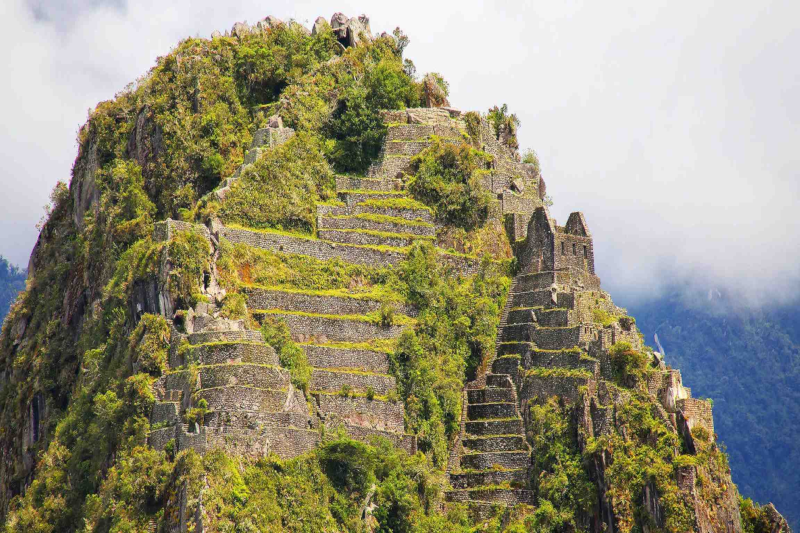
Most of the amazing pictures that are shot down of Machu Picchu are made at the top of Huayna Picchu, which is the hill behind Machu Picchu. This causes the increase to be tempting, yet is it too challenging? The response is a definite yes, mostly due to the extreme exercise necessary at the elevation. The road is not as such a road, but a kind of steep, rustic stony staircase. It is like trying a grueling exercise with just a fifth of your usual lung capacity to climb it without being properly acclimatized.
We have a pretty simple rule of thumb in this, and that is that you must not even think of undertaking it until you are well into the high-altitude area (Cusco or the Sacred Valley) and feel wholly free of all signs of altitude. To make the beautiful challenge miserable and even perilous, trying it any before makes it a perilous matter.

However, best of all, it is quite alright not to be able to climb this mountain. You do not need to hike Huayna Picchu in order to get an unforgettable experience. The principal citadel of Machu Picchu is huge, enchanting and features ample of wondrous perspectives in its own case. Do not allow an obsession with wanting what someone else has led you to exceed what your body can handle.
It happens to most people that once they are at high altitude, they become a bit off. They should know how to differentiate between an individual signal that it is time to decelerate and a serious sign that action is necessary. It is not about being tough but being smart.
Visualize it as a mere traffic light mechanism:
Descending directly is the best remedy to serious cases of altitude sickness. Wait not and attempt to sleep it off. Move to a lower area within the shortest time possible and obtain medical care.
A definite plan of how to deal with altitude is now in place and in no time you will be able to anticipate how this may be used as an advantage in your adventure and a planning step. All you have to do is to plan in three golden rules:
These basics have made the altitude no longer an issue, but a solved problem. Now you are prepared to give attention to the magic of the Andes, rather than to mountain air. Go and make the safe, healthy and incredible adventure you deserve.